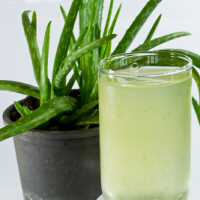
What is Aloe Vera?
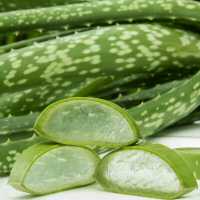
The Aloe Vera plant is a cactus-like perennial of the lily family best known for its healing properties. Some of those healing properties include its being anti-inflammatory, anti-microbial and anti-fungal. Thus it has gained a reputation as being one of nature's miracle plants, like tea tree, yarrow, comfrey, turmeric, lavender and eucalyptus.The leaves of aloe vera have no stem and when healthy have a lovely green colour with small lighter spots on them. Leaf colour can vary between species, from dark hunter green, through forest, kelly and lime green.
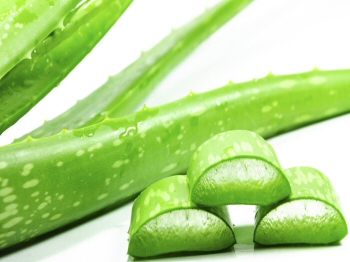
Leaves appear a little sword-like and have small harmless spines along the entire edge of the plant. They rarely do any damage, but large leaves with hard and dense spines can make you jump if you 'rake' along them. This is more because you think they might cut, rather than any actual harm being done.
Before modern times in which we now have a pill for everything, the ancient world had rather less options and aloe was used extensively by all the major civilizations to heal various diseases, both external and internal. This ability to bring relief for such a huge variety of ailments has seen aloe vera become very popular among people from around the world, some of whom had never heard of it before now.
I make some guardedly bold claims about my experiences with aloe, but it is important to remember they are my experiences. It is my strong belief that aloe may have the same healing benefits for many others, if not all, and that it has the potential to become one of the worlds favourite home remedies for a variety of health problems. I guess, if that proves not to be true in individual cases, then there is always conventional medicine to fall back on, or to use alongside.
I've never been a 'them and us' kind of guy when it comes to health. I just like to try to use the many vitamins, amino acids, enzymes, mono- and polysaccharides that aloe contains to best advantage, before or alongside, orthodox and conventional treatments. Doesn't that make sense? To use something natural first rather than go immediately to the synthetic?
What makes up the individual parts of the plant?
Well, there's no trunk, stems, spreading nature like a tree, or fruits like a tomato. The outer layer of leaf is quite tough overall, but it does not resist snapping, cutting, puncturing or bruising.
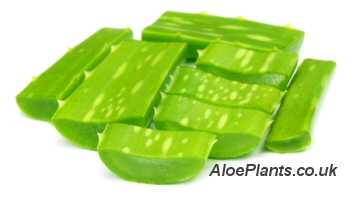 I suppose as the inner content of the leaf is soft and squiggy, you could say it acts a bit like our skin because of it's flexibility and ability to indent and recover.
Just inside the rind is a yellow liquid, or sap, called aloin. This tastes rather bitter, and has laxative properties. More on that elsewhere on this site.
Inside the sap layer is a layer of mucilage, which is regarded as the container medium for the inner gel, perhaps a bit like the visceral peritoneum which encloses the visceral organs in humans.
The gel is found in the inner leaf, resembling a clear or semi-translucent jelly; the parenchyma plant tissues. This gel is known to have anti-inflammatory, anti-bacterial and anti-fungal properties, and is a rich source of nutrients, enzymes, vitamins and minerals.
We all know that aloe vera is found in a huge variety of commercial products nowadays. It would not surprise me in the least to find you could buy aloe added to wall paper paste, for whatever reason, justified or not. But one thing is certain, the aloe they contain has also been produced commercially, and this means they will have been grown using fertilizers, insecticides and chemicals, to make the volumes necessary for mass production.
Upon harvesting the gel goes through heavy processing to prepare, stabilize and clean it for use in commercial products like creams, lotions, cleaning products and as a food additive.
Cleaning involves high pressure sprays, storage tanks or soak tanks, and brushing to clean the leaves of dirt, debris, insects and contamination.
 The leaves are then crushed, pressed and ground up, and filtered to remove solid matter. The liquid is passed through carbon filters to extract the aloin or latex, the plant tissue and musilage. Gradually finer and finer filters are used to remove any microscopic debris.
The aloe vera end product is then purified and stabilized with either the cold filtration process, heat treatment pasteurization and/or chemical sterilization.
Various antioxidants, enzymes and glucose oxidase are added to stabilize and protect the product from becoming oxidized. Preservatives, stabilizing agents, thickening and flavouring agents are also added to help preserve and prevent contamination or physical change of the product.
I put this information here not to put you off, but to assure you that commercial products are safe and pure and tested to make sure they comply with any regulations regarding supply to the public for topical and internal uses. This is a good thing. But, how much of the 'good stuff' has been cooked and neutralized out of the gel in the process?
Now, you need to make the resulting gel into a product that differentiates itself from all the shampoos, hand creams, lotions, drinks, pills and washing products that line our shelves, and that is when you can go to town with additional ingredients. Things like:
- Acrylates/C10-30 Alkyl Acrylate Crosspolymer. Made from many ingredients and formed from large chains of monomers, or binding molecules that allow it to bind to both water and oil. Used as a stabilizer, to increase the viscosity of a product and to form a thin film when applied topically. During the polymerisation process, benzene is often used as the solvent. Benzene is highly carcinogenic, toxic to humans, environmentally hazardous and an irritant. All of the studies show this is not a problem. But who paid for the studys? Cosmetics companies?
- Where can you find this stuff? Aloe vera gel, facial moisturizers, treatment creams, anti-aging products, tanning lotions and sun creams, shampoos, hair coloring and bleaching products, styling gels and lotions, cleaning products and drugs, chewable, sublingual and effervescent tablets, suppositories and oral suspension medicines. One product may be fine, but what is the combined dosage when you are using several or all of these products, as indeed, most of us do?
- Sodium Hydroxide. Why is this chemical mixed in with Aloe Vera skin care products? Sodium hydroxide (NaOH), also known as lye and caustic soda, is an inorganic compound, which is highly corrosive and used mostly as a strong chemical base in the manufacture of pulp and paper, textiles, drinking water, soaps and detergents and as a drain cleaner. The only reason it may be in aloe based creams and gels is because it feels slippery when it comes in contact with skin.
- Touching sodium hydroxide solution with the bare hands, while not recommended, produces a slippery feeling. This happens because the oils of the hand are converted to soap. Sodium hydroxide is used in many instances where it is desirable to increase the alkalinity of a mixture, or to neutralize acids.
Here's the kicker, sodium hydroxide can be used to digest tissue and has been used to dispose of corpses by criminals and serial killers. A dilute solution spilled on the skin will burn severely if the area is not washed thoroughly, for several minutes with running water. Splashes in the eye can be more serious and can lead to blindness.
Food grade sodium hydroxide uses include washing or chemical peeling of fruits and vegetables, chocolate and cocoa processing, caramel colouring production, poultry scalding, soft drink processing, and thickening ice cream.
So much for the food industry, now here comes the cleaning industry. You've heard of 'caustic'? When warm it is used to clean tanks, pipes and processing equipment. It can dissolve grease, oils, fats and protein-based deposits in the kitchen, and is an effective type of drain cleaner, unblocking clogged drains in waste discharge pipes under sinks and underground. It is also commonly used as paint stripper on wooden objects. Enough already!
- Touching sodium hydroxide solution with the bare hands, while not recommended, produces a slippery feeling. This happens because the oils of the hand are converted to soap. Sodium hydroxide is used in many instances where it is desirable to increase the alkalinity of a mixture, or to neutralize acids.
- Phenoxyethanol. Phenoxyethanol is an aromatic ether alcohol used as a perfume fixative; an insect repellent; an antiseptic; a solvent for cellulose acetate, dyes, inks, and resins; a preservative for pharmaceuticals, cosmetics and lubricants; an anaesthetic in fish aquaculture; and in organic synthesis. It is used as an alternative to formaldehyde-releasing preservatives. In Japan and the EU, its concentration in cosmetics is restricted to 1%. This still means that every 500ml of product can contain as much as a medicine teaspoon measure (5ml) of Phenoxyethanol, which is about a third of a tablespoon.
- Where can you find this product? It is commonly found in the ingredients listed as "fragrance" in many skin care brands, even organic ones, and also used as an antibacterial and preservative chemical in vaccines and bug sprays. Sunscreen, facial products, scrubs, moisturizers, body wash, mascara, all the stuff you put on your skin can contain it. Why is this bad?
Well, Phenoxyethanol is made out of carcinogenic and toxic compounds. It is neurotoxic. Ingestion may cause CNS (central nervous system) and respiratory depression, vomiting and diarrhea. Animal studies have found it to be a ovarian/reproductive toxin and a significant contact allergen/irritant. I don't know about you but I don't expect to find this in products that have 'certified', 'natural' and 'organic' on their label.
- Where can you find this product? It is commonly found in the ingredients listed as "fragrance" in many skin care brands, even organic ones, and also used as an antibacterial and preservative chemical in vaccines and bug sprays. Sunscreen, facial products, scrubs, moisturizers, body wash, mascara, all the stuff you put on your skin can contain it. Why is this bad?
A cautionary note: Aloe Vera is very healthy, natural and useful in so many ways, but there are a few people who find they react against the plant and its constituent parts, or have an outright allergy to it. Please, if you find yourself in this unfortunate group of people, avoid using aloe or products that contain it and consult with your doctor, nutritionist or herbalist to explore alternatives, such as yarrow, tea tree, milk thistle, slippery elm, arnica or something similar.