Order Page
NEWS of a NEW PRODUCT: Calling all gardeners; it's cuttings season, time to get your clippers out!
It's cutting and repotting season. To learn more about using Aloe Vera Rooting Hormone Gel to get your cuttings off to a good, healthy start, order online today.
This page offers for sale large Aloe Vera leaves (vacuum sealed) where you extract the gel and use from the leaf.
Want to see some more information first? Click around this website to find out all you need to know about growing Aloe Vera, and its uses in the home and for your family.
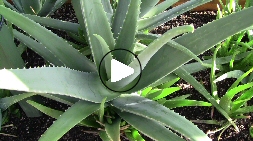 |
The greenhouses are all finished at last and the aloe plants are all growing really well. The greenhouses are called Rose, Daisy and Poppy. This video shows the plants growing in situ and it is these that are dug up to send out or cut to vacuum seal and post to you depending on your requirements. Video link: https://youtu.be/m7smdgtAfOE |
↓ ↓ ↓ ↓ Vacuum Packed Aloe Vera Leaves ↓ ↓ ↓ ↓
Note: Price includes post and packaging to the UK |
Amazing uses of Aloe Vera gel, straight from the leaf. Make your own topical and internal products from the gel of the Aloe Vera leaf. 100% natural, straight from the plant. Vacuum sealed for freshness and to seal in the nutrients, vitamins and minerals. |
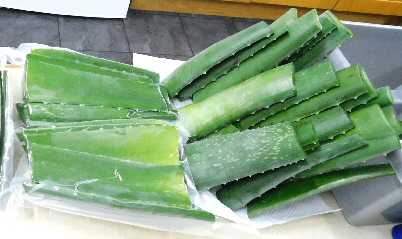 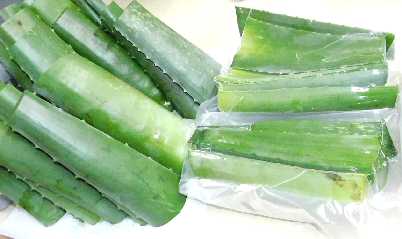 Our vacuum packed leaves represent amazing value. Not just in price, but also in the quality of product. These leaves are all 3 or 4 years old, the time when they are at their best and most nutritious in terms of ingredients. The pictures above represents the leaves you will receive in the post, and the videos below give you a detailed explanation of how to extract the gel. | |
Topical uses for Aloe Vera: Gel extraction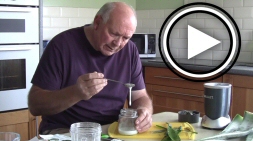 Video link: https://youtu.be/hqcqAkg8iDQ |
Internal uses for Aloe Vera: Gel preparation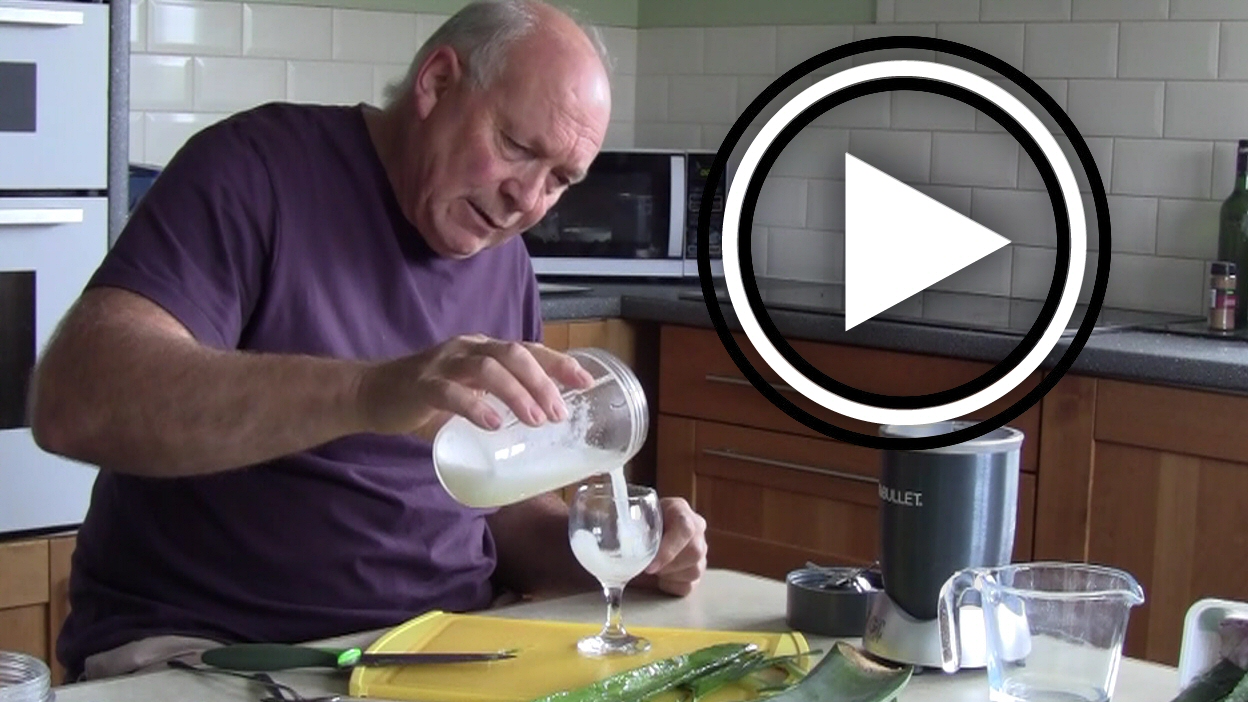 Video link: https://youtu.be/AYPoetkIIyA |
You used to sell plants on this site. Have you stopped selling them now?
Just for the time being, yes. I am sending out so many vacuum pack orders, that I have to concentrate on sending the very best I can offer, and tending to small plants is very time consuming, especially when there are nearly 2000 of them. By the time they get the attention they deserve they have gotten so big that it is impractical to send them in the post.
The other reason is simply that aloes are really very fragile and the leaves won't bend. Even when I carefully close them to get them in a box small enough to post, they snap and are ruined. I can't in all good conscience send out damaged goods, so until I can address this problem, I've decided to suspend sales of plants. I am really sorry, but I hope you understand the issues faced in getting them to you in pristine condition.
Can I see an example of what I will receive through the post please?
Yes, of course. Just so there is no ambiguity between what you are ordering and what you are expecting to receive, I am providing these pictures. The small aloes will be a minimum of 7" length at the largest leaf from base to tip. Some will be a little longer, up to 9", but nothing shorter, overall, than 7". This is so they fit inside the large letter postal boxes, shown below. Placed on top is your growing tips and usage guide.
Plant orders:
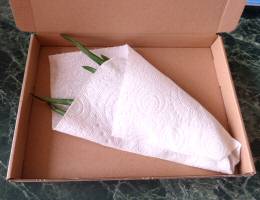
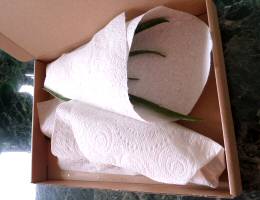
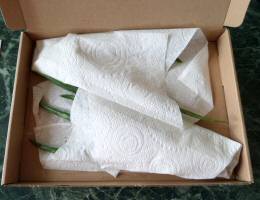
When you order two or three small plants, they can sometimes fit in the same box, as in this example. If they are slightly larger, they may come in seperate boxes, or one larger box. Plants are wrapped in kitchen roll and taped to the inside of the box to prevent them being bashed about in the box during their time in the post. You will need to open these packages carefully so as not to damage the plant.
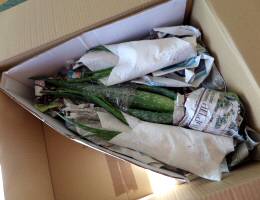
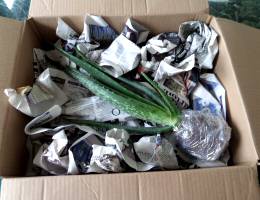
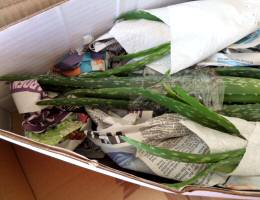
The pictures above show medium plants being prepared for dispatch. The box is strengthened with tape, and newspaper sheets scrunched up to provide protection all the way around your plant. Plant roots are wrapped in newspaper, the leaves are gently closed and wrapped in cling film, so they don't thrash around inside the box, and the whole plant is then wrapped in more newspaper, like they used to do with your fish and chips in the old days. The box flaps are then taped shut and a flash of FRAGILE tape is applied across the top of the box. This is all done in an effort to get your plant to you in the best condition possible and in the shortest time.
Vacuum sealed leaf orders:
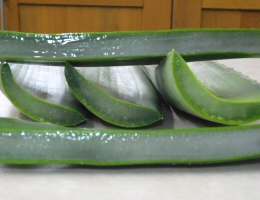
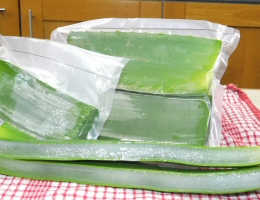

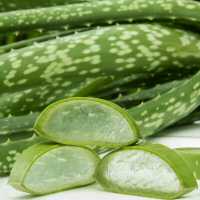
These pictures show the raw aloe vera leaf, showing the thickness of the gel. The second picture shows them vacuum sealed, and the third picture is the same sealed leaves in their box ready to be sent out. This is how you will receive them; a bit more padding inside to protect them, sealed and addressed to you.
Are your plants and leaves organic or approved by a UK organic control body?
No. I realize that this will put some people off. But before you go, please allow me to clarify.
Becoming listed as an organic producer is expensive and I am neither rich, nor do I sell enough to warrant going to the expense of being certified. However, the criteria for becoming an organic producer is listed here on the UK goverment website. On this page are the main points and criteria that are expected of an organic producer.
These are:-
1. Avoid artificial fertilisers and pesticides. We use no artificial fertilisers or pesticides in any of our greenhouses. We make our own fertiliser and soil conditioner by composting garden and kitchen waste. We make liquid fertiliser from worm heaps and chicken manure from our own totally free range chickens (which means we only have night-time perch droppings, I don't go round the garden scooping up poop, honest!).
2. Use crop rotation and other forms of husbandry to maintain soil fertility. Obviously my main crop is Aloe Vera so crop rotation is difficult, however when a plant comes out of the ground, before replanting, the soil/compost is turned regularly to expose it to the sun, which keeps bacteria, mould and other nasties at bay. We capture greenhouse water into huge IBC tanks to water the plants, which is rainwater and not mains water, so there is no chlorine or other chemicals like we have to put up with in our drinking water.
3. Control weeds, pesticides and diseases using husbandry techniques or approved materials. I control weeds by pulling them out of the ground around the base of my Aloe plants when they are tiny. I have no need for weed killer. For pest control I hang sticky papers above the plants, which helps to control any white fly or black fly. The greenhouses are sealed all around the bases and so we don't seem to get an ant or slug problem (having said that you just know what I will find next time I go in, don't you?) Aloe Vera doesn't really suffer from many diseases that aren't caused by the conditions we grow them in. If they suffer, it's usually our fault. Fix the problem, fix the plant, is usually how it works.
I hope these few points show that I do care about what I'm growing and how I grow it. I don't honestly know how I can be more organic in my approach to this work. If you can think of anything please let me know. Thank you.
Just as an aside and for transparency: I did once have a few plants go dark brown in the corner of one greenhouse. I couldn't find any information or pictures on the internet about it, so concluded it was some rare disease speading through the flock. It turned out to be nothing of the sort. The IBC tank was overflowing and the water came under the greenhouse base and soaked the soil inside at the roots of my poor aloes. I didn't notice this at first, and so in a panic ripped the plants out and burned them on the bonfire before the problem spread further. Once I knew it was my fault (see, its always something we do wrong), I installed land drainage pipe along the side of the greenhouses to carry away excess water, and the problem has not returned.
A word about perfectionism. This is a very important point that may affect your buying decision
Very occasionally a plant may not be absolutely perfect. I never send out plants that have large blemishes, but it is not possible, when grown under organic conditions, to have total perfection 100% of the time. This is because no pesticides are used, nothing artificial is used in the soil; they are as god made them and I take care of them.
It is natural for an aloe to allow the very end of a leaf to check back and wither. Usually, this is the last half inch or so and may affect one leaf in ten. It can be picked off and discarded, or even cut off to a clean portion, but it means the leaf end is blunt instead of pointed. It does not affect the plant, or the quality of the gel. In fact, it is a plant survival strategy.
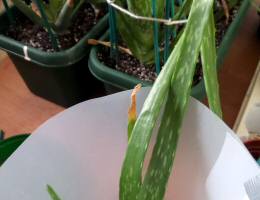
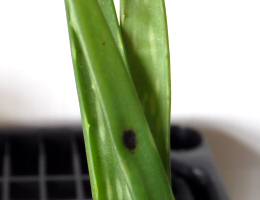
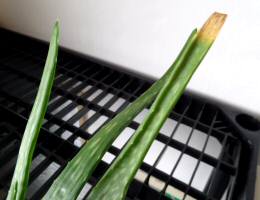
Other times a leaf may have a dark spot, even black against the green. This is usually where the leaf next to it has punctured the outer skin with one of the spines that grows up the side of the plant. On a young, tender, immature leaf, it can arise following an impact by a flying insect, or it is possible that a pesky insect has punctured the leaf with its stinger and done it a mischief. I've even come across the odd ant biting into a leaf; I guess they like gel too. Usually it is best just to use this leaf first.
If you really can't cope with these tiny imperfections, please don't order. You can buy one that has been sprayed with pesticide, preserved with chemicals, artificially fertilized and forced into perfection just about anywhere else. That's just not how I do things and certainly not how I want my gel.
Do your large Aloe's represent good value for money?
Yes they do when you take into consideration size and weight. The small Aloe's are usually between 7-9" in length and weigh between 75-100g (Sorry, I was educated during a time when they taught us Imperial AND Metric at the same time, so I still use and interchange both, hope that's ok). The medium plant leaves can be from 3-4" all the way up to 12-15", and sometimes 18", on the same plant, but here's the real deal, they can weigh between 450-750g. That's a whopping 10x what the small plants do, and yet are only 2.5 times as much to buy (perhaps I should rethink this soon). Of course, you have the added bonus that you can use the leaves and gel straight away. My problem is in keeping up with sales as they take years to grow and a click to sell, but I'm happy to have that problem, even if it means running out occasionally.
So are the little ones less useful?
Not at all, given time, your smaller Aloe will become a giant, and catch up their brothers and sisters. It just takes time. The only thing required is a little patience and some lovely warm weather. So if you need to make use of your plant leaves, take them sparingly at first, and this will spur the plant on to make more and more leaves. It's a kind of plant survival mechanism that kicks in. I think for that reason, more and more people are buying two or three of the smaller ones at the same time. This is so they can use small slices of plant leaf from one, allowing the others to grow on for future use, which then, in turn, gives the first one a chance to recover.
How will I receive my Aloe Vera plant?
Your Aloe Vera will be shipped 'dry root', (meaning with no soil) as in the picture on the right. Do not be alarmed by this, it is common practice with these types of plants which can survive for many weeks and months without any water, and also relatively short periods of time in total darkness.
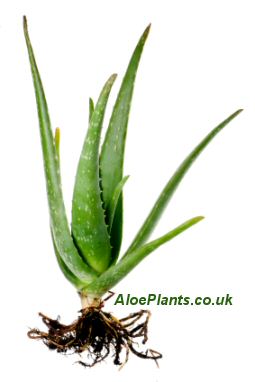 Once you receive it, your Aloe will need potting up in normal compost (with added perlite and sand/grit), or a grit based compost, such as a purpose mixed cactus compost.
Aloe Vera is succulent of leaf and is used to having dry roots occassionally (as you'll quickly find out if you over-water it), so it will not come to any harm during its brief stay in the postal system. Full details of what to do upon receipt are included with every plant, even if you order two, because I never know if you buy one for yourself and one for a friend.
Pup plants are wrapped in kitchen roll and sellotaped into a protective pouch, which is then sellotaped to the inside of a cardboard box, so it won't rattle round in the post. Medium sized plants are placed on a bed of scrunched up newspaper, which is then cushioned all around the sides with the same, and then covered over with lots more. Your growing tips leaflet is also included to help you successfully raise your plant with no setbacks, and visit here: growing tips for even more guidance if needed.
Sometimes, if you want me to, I will risk it, but normally, if your order comes in Friday or Saturday, I delay posting out until Monday. This is just to reduce the chance of your plant sitting in a sorting office over the weekend. Medium sized plants will need to be signed for and proof of posting is always obtained, so we can always trace back if there is a problem.
I hope very much that you will enjoy growing your Aloe Vera, that it will serve you and your family for many years to come and if you have any questions, please contact me prior to making your purchase. Thank you, Phil.
Just one last thing before I go regarding email enquiries and your JUNK folder
I recently received an order by a lady who subsequently had some requests and enquiries. One request was not to send the plant until after the weekend, and also some questions about plant maintenance and usage of the gel. 3 emails in all.
I replied to each email with the answer, 3 emails in total. But the curious thing was the second and third emails were also asking the same questions as the previous email. This obviously began to ring alarm bells with me that she wasn't getting my emails, and sure enough, after a few days, I received a chargeback and transaction dispute via PayPal. The reason being, 'I have written to this seller 3 times and got no replies, can PayPal help?' At this point I still hadn't sent the plant because the date which I was asked to send it had not been reached yet.
I cancelled the transaction and refunded the persons money straight away, because PayPal take a dim view of too many of these problems. In the transaction dispute section is a small message that you can send to the buyer. I wrote in this box: PLEASE CHECK YOUR JUNK FOLDER FOR MY EMAILS. As presumably, she would get emails from Paypal straight into her inbox.
I got an email later on that day to say, 'I never check my spam folder, I just delete it without opening it'. So there's the answer. If you correspond with me and the return email goes to your spam box for whatever reason, if you don't check it now and again, we can never communicate effectively. Just thought I'd remind everyone, hope you don't mind, as even when something is absolutely not your fault, you still sometimes get the blame.