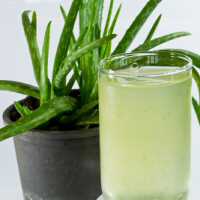
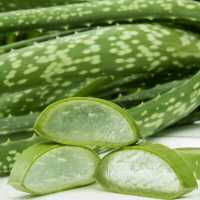
Treating Insect Bites with Aloe Vera
Description: What sort of insect bites are we talking about here? Bugs that bite or sting include wasps, hornets, bees, horseflies, ticks, mosquitoes, fleas, bedbugs, spiders and midges. Mostly we handle these quite well but occasionally they can become infected, cause a severe allergic reaction (anaphylaxis) or spread serious illnesses such as Lyme disease and malaria.Insect bites and stings will usually cause a red, swollen lump to develop on the skin, which may be painful and in some cases can be very itchy. Symptoms can be short lived and normally improve within a few days, but can last longer if an infection is included or a mild allergic reaction adds to the complication. Severe allergic reactions can occur in some people, causing symptoms such as breathing difficulties, dizziness and a swollen face or mouth. This requires immediate medical treatment. Fluid blisters, pus, puncture marks, stingers and bumps can sometimes be very slow to heal.
Just a note about speed of delivery: As it can take some time for your leaves to arrive, it is best to order them early and have the gel ready in the freezer before the summer season starts. PLEASE DO THAT NOW! Once the leaves are cut I need to stand them on end to drain out the aloin for 12-15 hrs. Then pack them up and get them to a postal depot for collection by the delivery service. This is often the next day. Then we must wait for delivery to your door. Frozen gel will last for a year or more in your freezer, so please do it now to avoid having to wait.
 |
 |
What can I do about insects that bite me?
If you want to treat your condition naturally, or in conjunction with a conventional treatment, you might like to try using our Aloe Vera gel. The gel contains dozens of different nutrients, including vitamins, minerals, enzymes, amino acids, sugars, anthraquinones or phenolic compounds, lignin, saponins, sterols and salicylic acid. Often these are the very constituents found in your medication.
How do I use my gel when it arrives?
As mentioned earlier, hopefully you will have this ready in the freezer for immediate use. First, wash the bite area with soap and water to remove any venom, pus, insect parts or stingers in the vicinity of the bite site. Use the gel in its frozen state and circle around the bite. Keep the cube moving as it slowly dissolves. This will help reduce pain and swelling, and reduce the likelihood of any infection taking hold. Aloe's antibacterial and antiviral properties will help here. Allow the aloe gel to start to dry and either leave open or cover softly with a bandage.
Another way is to soak a cotton pad in the dissolved gel and place it on top of the affected area of skin. Hold in place for several minutes, or again, cover with bandage to keep it next to the skin. The gel will continue to do its job of healing the bite area and reducing all of the bite symptoms.
|
Order Button Order freshly cut Aloe Vera leaves in a long lasting vacuum pack. 100% natural, straight from the plant. Vacuum sealed for freshness and to seal in the nutrients, vitamins, sugars and minerals. Note: Price includes post and packaging to the UK |
Aloe Vera slices and vacuum packs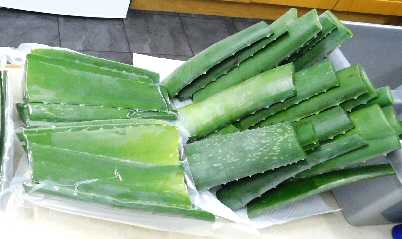 |
What do I do when my leaves arrive? Just follow these simple instructions.
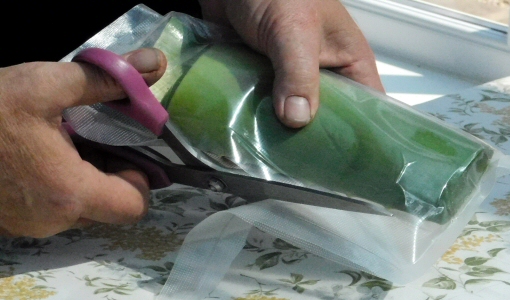 Cut open the vacuum packs and wipe your leaves clean |
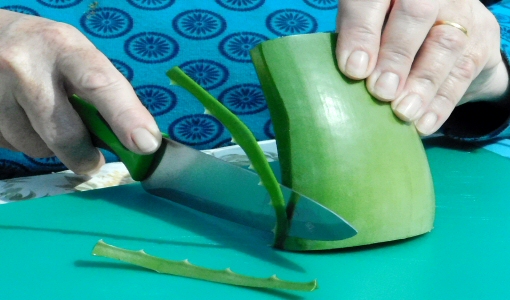 Slice off the spines on both sides with a sharp knife |
 Slide a dessert spoon between the skin and gel to separate |
 Scoop out the gel from the leaf using the same spoon |
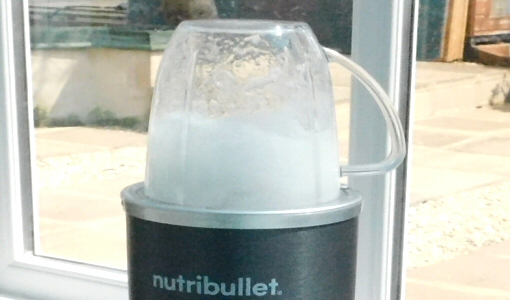 Liquidize for up to 30 secs in a liquidizer, whisk or nutribullet |
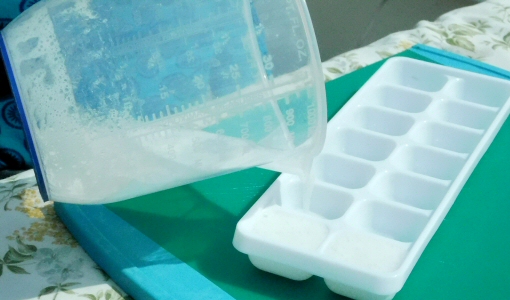 Once spun the gel will become a liquid. Pour into ice cube trays |
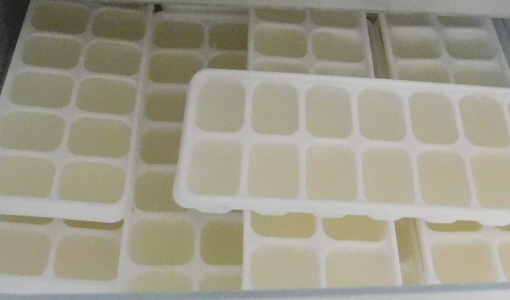 Place in freezer. A full freeze usually takes around 24hrs |
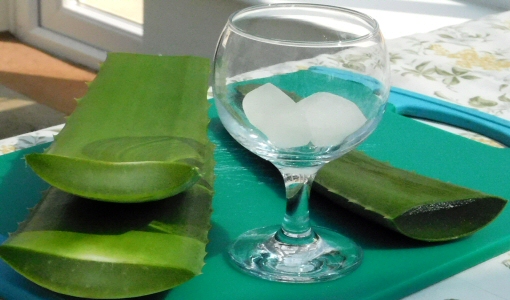 Internal use: Place cube/s in glass, add water, allow to defrost, drink |
 External use: Defrost undiluted, apply to skin, or rub cube on directly |
Please contact me when your condition improves. I really love to hear your stories.
Disclaimer: Aloe Vera is known to be a wonderful cure-all around the world and back again. But it is always best to keep an open mind on both sides of the orthodox and natural remedies debate, and cherry pick the best solution on a condition by condition basis. Natural remedies alone may not always help to cure your condition, especially if there are contributory factors. If the condition worsens or takes longer than anticipated to recover, you are advised to contact your doctor. Normally, your aloe may be used along with any conventional medical treatment offered.
REFERENCES: Evidence studies and research papers.
Here is the evidence that I have found to support the use of Aloe Vera gel in your recovery.